Finding the right partner can shape a cosmetic product long before it reaches a shelf. A bottle may look elegant in a sample, then leak when paired with a thick serum. A pump may dispense unevenly. Small details matter. In 2026, a reliable search means looking beyond glossy catalogs and low unit prices. It means checking whether a supplier can explain materials, production controls, lead times, and quality checks in plain language.
Quality-management expert W. Edwards Deming wrote, “Quality comes not from inspection, but from improvement of the production process.” That principle fits cosmetic packaging well. Ask how a supplier prevents defects, not only how they sort them afterward. Request production samples, written specifications, and evidence of compatibility testing. For a pump bottle, clarify the dosage, closure fit, and leakage test conditions. For glass, discuss breakage protection and packaging for shipment. Details like these reveal more than a polished presentation.
This guide explores how to find a reliable cosmetic packaging supplier through practical checks: reviewing experience with similar products, assessing communication, confirming capacity, and comparing full costs. A low quote can be tempting. It may also hide extra tooling, unclear minimum orders, or long sample revisions. I would not treat one successful sample as proof of consistent production; that deserves closer scrutiny. Compare several suppliers, keep decisions documented, and ask direct questions when answers feel vague. The best partner is not always the biggest or cheapest. It is the one whose promises hold up under careful testing.
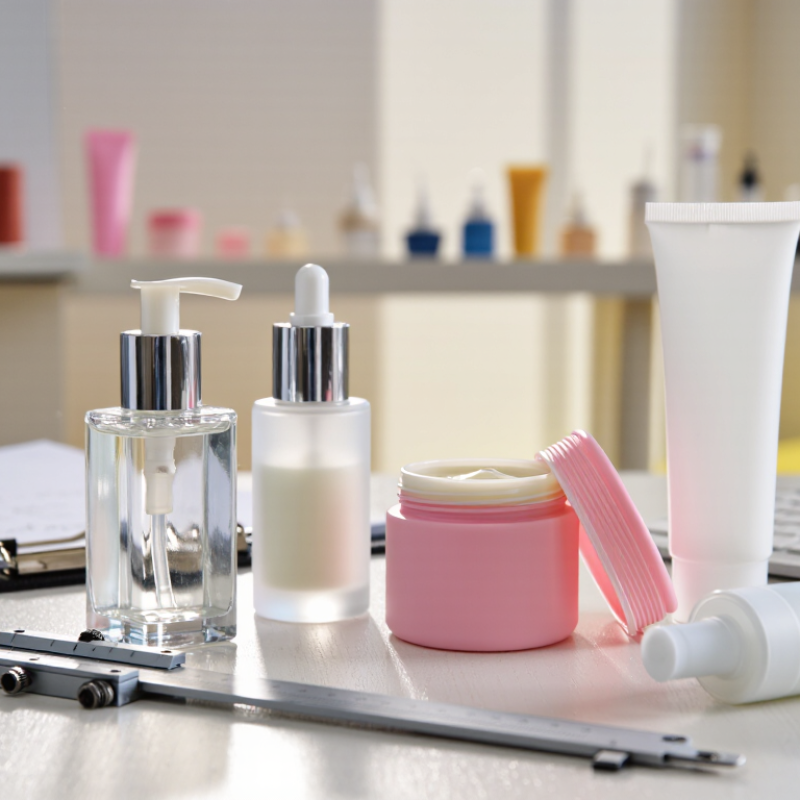
Define Your Cosmetic Packaging Requirements and Compliance Needs
Before contacting suppliers, turn the product brief into a measurable packaging specification. Start with formula type, fill volume, dispensing method, and expected shelf life. A 30 ml serum may need a narrow-orifice pump; a thick balm may not. Include container dimensions, preferred material, closure fit, color, decoration, and target order quantity. Be specific. Request samples made from production materials, not just attractive showroom pieces. Test leakage after repeated opening, pump output, label adhesion, and color under store lighting. Record results. One overlooked detail can delay a launch.
Define compliance by destination market and product category, then confirm current requirements with qualified regulatory counsel. Supplier documents may include material specifications, relevant safety information, declarations, batch traceability, and test reports. Ask which tests were performed, on which components, and under what conditions. “Compliant” alone is too vague. Check material restrictions, labeling space, recycling marks, and required product information before artwork approval; requirements vary and can change. Agree on who handles validation, document updates, and change notices if a resin, ink, or component source changes. Keep a signed specification and approved sample. It sounds administrative. It prevents costly surprises. Early compatibility tests may not predict months of storage, so leave room for uncertainty and review the finished formula in its packaging.
Assess Supplier Expertise, Materials, and Customization Capabilities
A reliable cosmetic packaging supplier should explain how its bottles, jars, pumps, and closures are made. Ask about experience with your product type and filling process. A supplier familiar with a thick cream may not understand what a lightweight serum needs. Request material specifications and compatibility test details, not just a general assurance. Check sample packaging for leaks, uneven seams, loose caps, and awkward dispensing. Small details matter. Ask how samples were tested and whether testing reflects your formula and storage conditions.
Customization is more than choosing a color. Discuss printing methods, finishes, mold options, and the practical limits of each. Ask for technical drawings, size tolerances, minimum order quantities, and revision timelines before approving a design. A capable supplier can explain trade-offs, such as how a heavier finish might affect cost or production time. Request examples of quality checks and batch records. The first sample may look polished. That is not enough. Test it on your filling line and check it again after transport simulation. No checklist removes every uncertainty; a second review is worth the time. Keep decisions and approved specifications in writing, since small changes can be easy to overlook.
Verify Quality Systems, Certifications, and Regulatory Compliance
A reliable cosmetic packaging supplier should be able to show how quality is managed, not just promise consistent results. Ask for the quality manual, recent audit findings, and records for incoming material checks. Look for clear batch traceability: staff should be able to connect a finished bottle or jar to its resin, production date, and inspection results. Check that any certificate is current and covers the actual manufacturing site and processes you plan to use. A certificate alone is not proof that every item meets your needs.
Regulatory requirements depend on the product, packaging materials, and markets where the product will be sold. Ask for relevant material declarations, test reports, and documentation on restricted substances or product contact, as applicable. Confirm how the supplier controls changes to materials, tooling, and production. Then compare those records with your own product specifications. A neat document folder can still miss an important detail. That is easy to overlook, even with a careful checklist.
Tips: Request samples from normal production, not only specially prepared samples. Check cap fit, leakage, print durability, and color under consistent lighting. Ask who reviews failed inspections and how corrective actions are tracked. If an answer is vague, ask for a specific record.
Compare Pricing, Minimum Orders, Lead Times, and Shipping Options
How to Find a Reliable Cosmetic Packaging Supplier in 2026
Compare Pricing, Minimum Orders, Lead Times, and Shipping Options
When evaluating a cosmetic packaging supplier in 2026, compare the full quote, not just the price per jar. Ask whether decoration, sample fees, molds, and protective cartons are included. A quote for 5,000 glass bottles may look low until tooling and inland delivery appear. Request the same specifications from each supplier: material, capacity, color, closure, and print method. Small differences matter. A cap that fits poorly can slow filling and create avoidable waste. Check how long the quote remains valid, too.
Tips: Put unit cost, minimum order quantity (MOQ), sample charges, production lead time, and freight on one comparison sheet. Ask for a written breakdown. Then check whether the MOQ applies per color or per design. It often does.
Confirm lead times against actual production steps, including proof approval and inspection. Ask for recent schedules or a pilot order before committing to a large run. A promised date is not guaranteed; delays happen, so some skepticism is useful. Compare sea, air, and consolidated shipping by total landed cost, delivery window, and tracking. Clarify who handles shipping documents and what happens if cartons arrive damaged. A dependable supplier answers these questions clearly, even when the answer is inconvenient.
How to Find a Reliable Cosmetic Packaging Supplier in 2026 — Compare Pricing, Minimum Orders, Lead Times, and Shipping Options
| Packaging Option |
Indicative Unit Price (USD) |
Typical MOQ |
Typical Lead Time |
Common Shipping Options |
Best Fit |
What to Confirm |
| Stock PET bottle with standard cap, 30–100 ml |
$0.12–$0.45 per unit |
500–3,000 units |
1–3 weeks for available stock; longer for decoration |
Courier for samples or small orders; air freight or sea freight for larger orders |
Initial launches, simple lotions, and cleansers |
Resin grade, bottle weight, closure fit, available colors, and whether the price includes the cap |
| Stock glass bottle with standard closure, 30–100 ml |
$0.25–$0.90 per unit |
1,000–5,000 units |
2–5 weeks, depending on stock and packing requirements |
Sea freight is common for bulk orders; air freight or courier may suit samples and urgent quantities |
Serums, facial oils, and products positioned for a heavier glass package |
Glass color, breakage protection, closure compatibility, and packed shipping weight |
| Stock airless pump bottle, 15–50 ml |
$0.45–$1.50 per unit |
1,000–5,000 units |
3–6 weeks; testing and decoration can add time |
Courier or air freight for samples and smaller orders; sea freight for bulk shipments |
Lotions and formulas where controlled dispensing is important |
Pump output, priming performance, formula compatibility, and component testing requirements |
| Printed squeeze tube, approximately 30–150 ml |
$0.18–$0.65 per unit |
3,000–10,000 units |
4–8 weeks after artwork approval and specification confirmation |
Sea freight for planned production; air freight for samples or time-sensitive replenishment |
Hand creams, cleansers, masks, and other flexible-pack products |
Tube material, print colors, cap style, artwork setup costs, and proof approval schedule |
| Custom-molded bottle or jar |
$0.80–$3.00+ per unit, excluding tooling |
Often 10,000–30,000+ units |
Typically 10–20+ weeks, including mold development, sampling, and production |
Sea freight is generally the most economical for production volumes; courier is useful for prototypes |
Brands needing a distinctive package shape and able to support a larger order |
Tooling ownership, mold charges, sample rounds, production tolerances, and mold maintenance terms |
Planning note: These are broad 2026 budgeting ranges for common packaging formats, not verified supplier quotations. Actual prices, MOQs, and lead times vary by material, capacity, decoration, order volume, destination, and market conditions. Request a written quotation that separates unit cost, setup or tooling fees, sample charges, packaging, freight, and applicable duties. Confirm whether lead time starts after deposit, artwork approval, or sample sign-off.
Evaluate Samples, Communication, and Long-Term Supplier Reliability
A reliable supplier should welcome close sample checks. Compare the approved sample with production-ready units, not just polished showroom pieces. Test pump output, cap fit, leakage, color consistency, and label placement. Record results under the same conditions for every supplier. Small details matter. A beautiful sample is not proof of stable production.
Grand View Research’s 2024 cosmetics packaging report valued the market at USD 49.4 billion in 2023 and projected 5.7% annual growth through 2030. That expansion makes dependable capacity worth checking, not assuming. Ask suppliers for documented lead times, quality-control records, and examples of how they handled defects or material changes. Confirm who owns each action, and request written updates when a specification changes. Ask again.
Communication quality shows up in specifics. Does the supplier answer technical questions clearly, flag risks early, and keep a dated change log? For long-term reliability, review backup capacity, batch traceability, and how quickly problems reach a decision-maker. Run a small pilot order before committing to repeat volumes. No scorecard predicts every delay; I may still miss a weak signal. Keep the evaluation open to revision as real orders reveal how the supplier performs.
How to Find a Reliable Cosmetic Packaging Supplier in 2026
Evaluate samples, communication, and long-term supplier reliability.
Suggested evaluation weighting for a supplier review—not measured industry data. Verify sample quality, response performance, and reliability using documented tests, records, and references before scoring each supplier.
FAQS
Compare unit cost, minimum order quantity, sample fees, tooling, decoration, cartons, and freight. Ask for a written breakdown. A low jar price can hide extra costs.
Request the same material, capacity, color, closure, and print method from each supplier. Even a slightly different cap can affect filling and create waste.
Not always. Ask whether the minimum applies per color or per design. Check how long the quoted price remains valid, too.
Ask about proof approval, production, and inspection timelines. Request recent schedules or try a small pilot order. Promises can slip.
Check pump output, cap fit, leakage, color consistency, and label placement. Test every sample under the same conditions. A polished sample proves little.
Compare sea, air, and consolidated shipping by total landed cost, delivery window, and tracking. Clarify who handles shipping documents and damaged cartons.
Look for clear technical answers, early risk notices, dated change logs, and written updates when specifications change. Ask again if details feel vague.
Ask about quality records, backup capacity, batch traceability, and past defect handling. A pilot order may reveal problems a scorecard misses. I might miss one, too.
Conclusion
Learning how to find a reliable cosmetic packaging supplier begins with clearly defining your product’s packaging requirements, including the materials, size, design, functionality, and applicable compliance needs. Assess each supplier’s experience with cosmetic packaging, material options, and ability to customize designs. Ask about quality-control processes, relevant certifications, and how the supplier verifies that its products meet applicable requirements.
Next, compare pricing alongside minimum order quantities, production lead times, and shipping options to understand the full cost and schedule. Request samples to evaluate the packaging’s appearance, usability, and consistency before placing a larger order. Pay attention to how promptly and clearly the supplier responds to questions, and whether it can support your needs as they change. A careful review of these factors can help you choose a dependable partner for both your immediate order and a longer-term working relationship.

 Boxo Beauty