China’s beauty market is expanding, but sustainability is no longer a decorative brand promise. McKinsey estimates that China’s beauty market could approach US$96 billion by 2027. This growth creates room for responsible brands, yet it also raises customer expectations. Shoppers increasingly examine ingredients, packaging, sourcing, and product performance together. NielsenIQ’s 2023 Global Sustainability Report found that 78% of surveyed consumers consider environmental sustainability important. Trust matters.
This guide explores how to build a sustainable beauty brand in China through evidence, local experience, and measurable decisions. A practical strategy may begin with a lightweight refill pouch, a traceable botanical supplier in Yunnan, or a recyclable bottle tested for Chinese logistics. These details affect costs, shelf life, and customer confidence. They also reveal whether sustainability is operational or merely promotional. China’s market includes different income groups, cities, skin concerns, and shopping habits. One national message will not fit everyone.
The process is not perfectly clean. A refill system can reduce plastic, but it may require more transport and cleaning. A plant-based formula can sound responsible, yet farming practices still need verification. Brands should therefore document lifecycle assumptions and avoid unsupported environmental claims. The Ellen MacArthur Foundation stresses that packaging redesign must consider the entire system, not only the material. This introduction sets a realistic path for building credibility, regulatory awareness, and commercial resilience. Sustainable beauty is valuable. It is also demanding. Brands must keep testing, measuring, and correcting their decisions.
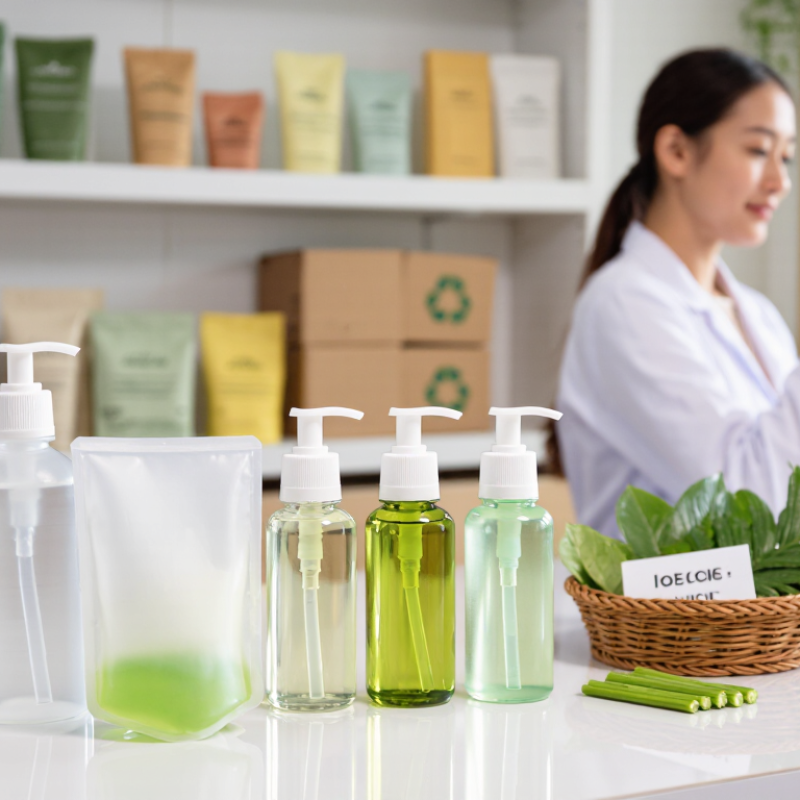
A sustainable beauty brand in China needs measurable goals, not soft promises. The first goal should reflect local conditions: lower packaging waste, reduce water use, and improve ingredient traceability. China’s National Bureau of Statistics reported retail sales of cosmetics at approximately RMB 435 billion in 2023. That scale makes small packaging decisions significant. Start with a baseline for every product, including packaging weight, recycled content, factory energy, and transport distance.
Set targets for the next three years. For example, reduce virgin plastic by 30%, increase recycled material, and publish packaging recovery instructions in Chinese. The Ellen MacArthur Foundation recommends designing packaging for a circular economy, but local collection systems remain uneven. This limitation matters. A recyclable package is not automatically recycled. Test targets in major cities before claiming national results.
Use recognized methods, such as ISO 14040 life-cycle assessment principles and the GHG Protocol. Measure emissions from raw materials to disposal. PwC’s Voice of the Consumer Survey 2024 found that 46% of global consumers would pay more for sustainably produced goods. That figure is useful, but not a substitute for Chinese consumer research. Conduct quarterly surveys and monitor repurchase rates, complaints, and disposal behavior. Some targets may fail. Record the failure, revise the baseline, and publish the evidence. Credibility grows through correction, not perfection.
Sustainability begins with local consumer research, not attractive packaging. Interview shoppers in different cities and age groups. Ask what they reuse, distrust, and consider worth paying for. A customer in humid Guangzhou may need lightweight skincare, while someone in dry northern regions may prefer richer textures. Listen locally. Social commerce also shapes expectations, but online popularity does not prove lasting demand.
Regulatory planning must start before product development. Check whether each cosmetic requires registration or filing with China’s National Medical Products Administration. Review ingredient restrictions, Chinese labeling rules, safety assessments, and advertising claims. Claims need proof. Keep test reports, supplier records, and product data easy to audit. Qualified local regulatory specialists can identify gaps that overseas teams may miss. Regulations and official guidance can change, so treat old checklists carefully.
Sustainable operations require measurable choices. Evaluate recyclable materials, transport distance, water use, and factory waste. A refill system may sound responsible, yet it can fail if customers cannot return containers conveniently. Pilot the process in one city before scaling. Track return rates, packaging damage, and repeat purchases. Be honest about limitations. Some low-impact materials cost more or perform poorly in humid conditions. Publish clear evidence instead of broad environmental language. A smaller, traceable supply chain may be more credible than a dramatic promise. Mistakes are possible, but hiding them weakens trust.
Building a sustainable beauty brand in China starts with product decisions, not green slogans. Formulas should use responsibly sourced ingredients, efficient processing, and clear safety evidence. Life-cycle assessment, guided by ISO 14040 and ISO 14044, can reveal hidden impacts. A low-water formula may still require energy-intensive manufacturing. Measure it.
Packaging needs equal discipline. UNEP’s 2023 report states that packaging represents about 40% of global plastic use. Brands should reduce unnecessary layers, select widely recyclable materials, and design containers for practical refilling. However, refill systems can create hygiene, transport, and consumer-convenience challenges. A lighter carton can feel cheap. That tension matters. PwC’s 2024 Voice of the Consumer Survey found that 46% of global consumers are buying more sustainable products, while 43% would pay more. In China, transparent instructions and credible disposal guidance may build stronger trust than decorative environmental claims.
Supply-chain work should include factories, ingredient processors, logistics partners, and workers. CDP’s 2023 analysis found that supply-chain emissions averaged 11.4 times operational emissions among reporting companies. Beauty companies should request energy, water, waste, and emissions data from suppliers. They should also audit labor conditions and trace high-risk materials. Digital traceability can help, but it is not automatically reliable. Our first supplier assessment may miss subcontractors. That is a real weakness, not a footnote. Publish progress, limitations, and corrective actions, using measurable targets and independent verification.
Designing packaging around measurable recycled-content targets can improve material selection, supplier requirements, and export readiness. The benchmarks shown are minimum targets under the EU Packaging and Packaging Waste Regulation, which can serve as a practical reference for responsible product and packaging development in China.
Source: Regulation (EU) 2025/40, Article 7, recycled-content requirements for plastic packaging.
China’s beauty market is becoming more attentive to ingredients, packaging, and product origin. Transparent branding must begin with evidence, not attractive green language. Explain where materials come from, how packaging is made, and what happens after use. PwC’s 2024 Voice of the Consumer Survey found that consumers would pay an average 9.7% premium for sustainably produced goods. However, price remains a serious concern in China’s competitive beauty market.
Use specific claims. Say “the bottle contains 30% recycled plastic,” not “eco-friendly.” Publish testing methods, certification details, and claim boundaries on product pages. Independent laboratories can verify recycled content, biodegradability, or carbon calculations. McKinsey’s 2023 China Consumer Report also highlights rising interest in sustainability among younger urban consumers. Still, a refill system is not automatically greener. Extra shipping, cleaning, and low return rates may weaken its impact. Our assumptions need testing.
Tips: Create a claim evidence file before launching. Include supplier records, test reports, calculation dates, and approval owners. Add a QR code linking to this information. Avoid vague words such as natural, green, clean, or zero impact. Review claims every year. A small correction is better than permanent overconfidence. Track complaints and questions from Chinese consumers, because confusion often reveals missing evidence. Use plain Chinese explanations, not translated technical jargon.
Building a sustainable beauty brand in China requires more than recyclable packaging. It requires measurable decisions from launch. Start by mapping suppliers, ingredients, packaging materials, transport routes, and disposal options. Record energy use, water consumption, packaging weight, and production waste for every product. Set a baseline before making public claims. Without reliable data, sustainability becomes decoration.
After launch, review performance monthly. Track refill rates, return rates, damaged inventory, customer complaints, and carbon emissions per unit. Use supplier audits and independent testing where possible. Chinese consumers may notice vague claims quickly, especially when product instructions lack disposal guidance. Clear Chinese-language labels can improve trust. However, measurement is rarely perfect. Small suppliers may provide incomplete records, and estimated emissions can change. Document these limits instead of hiding them.
Tips: Choose one product for a pilot. Weigh every component. Ask suppliers for dated evidence. Test packaging in real delivery conditions. Compare customer behavior, not only survey answers. Improve one weak metric each quarter. A lighter carton may reduce material use, but it could increase damage during transport. Sustainability performance needs this kind of honest trade-off review.
Set measurable goals for packaging, water, energy, transport, and ingredient traceability. Start with a baseline. Record packaging weight, recycled content, factory energy, and shipping distance.
Set a three-year target, such as reducing virgin plastic by 30%. Increase recycled material where performance remains reliable. Provide Chinese disposal instructions. Recyclable does not always mean recycled.
No. Test changes in major cities first. Local collection systems differ widely. Track recovery rates, damage, customer complaints, and repeat purchases. National claims may come too early.
Interview shoppers across cities, ages, and climate zones. Humid southern cities may favor lighter textures. Dry northern regions may need richer formulas. Online popularity can mislead.
Check registration or filing requirements with the relevant national authority. Review ingredient limits, Chinese labels, safety assessments, and advertising claims. Keep supplier records and test reports ready. Old checklists may be incomplete.
Use specific evidence. Say, “The bottle contains 30% recycled plastic,” instead of “eco-friendly.” Store test methods, supplier documents, calculation dates, and approval records. Avoid vague claims like “zero impact.”
No. Extra shipping, cleaning, damaged containers, and low returns can reduce benefits. Pilot one city first. Measure return rates and repeat purchases. The idea may fail.
Record the failure openly. Check whether the baseline or target was unrealistic. Revise the plan and publish supporting evidence. Correction builds trust. Perfection is unlikely.
Add a QR code to product pages or packaging. Explain material origins, manufacturing steps, and disposal options in plain Chinese. Avoid dense translated jargon. Review claims yearly.
Building a sustainable beauty brand in China begins with clear, measurable sustainability goals that reflect local environmental priorities and consumer expectations. To understand how to build a sustainable beauty brand, businesses should research Chinese consumer needs, regional market conditions, relevant regulations, and cultural preferences before developing products. This foundation helps ensure that formulas are safe, effective, responsibly sourced, and suitable for local customers.
Sustainability should also guide packaging, manufacturing, transportation, and supplier selection, with efforts to reduce unnecessary materials, waste, and resource consumption. Transparent branding is essential: environmental claims should be specific, credible, and supported by verifiable information rather than vague promises. After launch, the brand should track indicators such as packaging reduction, sourcing performance, customer feedback, and supply-chain improvements. Regular evaluation allows the business to identify weaknesses, communicate progress honestly, and continuously improve its sustainability performance while building long-term trust in the Chinese beauty market.

Boxo Beauty